
Cold Outreach for Hotel Sales:
What to Say (and What to Avoid)
April 14, 2026
Ask most hotel sales reps what they like least about their job, and cold outreach is usually near the top of the list. It feels awkward, it’s easy to ignore, and the rejection – even the silent kind, adds up fast. But here’s the thing: according to research from RAIN Group, 82% of buyers say they’ve accepted a meeting with a salesperson who reached out proactively. The problem isn’t cold outreach itself. The problem is how most people do it.
You have a beautiful property, competitive rates, and a sales team ready to close. The problem? Getting the right decision-makers to actually respond to your outreach.
Cold emails for hotel group sales is one of the most underestimated skills in hospitality business development. Done well, it opens doors to corporate accounts, recurring group bookings, and long-term event partnerships. Done poorly, it ends up in the trash – or worse, damages your brand before the relationship even begins.
Here’s what works, what doesn’t, and how to write cold outreach that gets responses.
The Reality of Hotel Sales Cold Outreach
Event planners, corporate travel managers, and group coordinators receive dozens of hotel pitches every week. They’re busy, skeptical, and have been burned by overpromising properties before. Your email has about three seconds to earn the next three seconds of their attention. That means every word has to earn its place.
what to say
1. Lead with relevance, not your property
The biggest mistake hotel sales reps make is opening with a description of the hotel. The prospect doesn’t care – yet. What they care about is whether you understand their needs.
Instead of:
“The Grand Meridian Hotel is a full-service property with 300 rooms, 15,000 sq ft of meeting space, and award-winning dining…”
Try:
“I noticed your team hosts your annual leadership summit in Q3 – I wanted to reach out because we’ve worked with several professional services firms on exactly that type of event and I think we could be a great fit.”
One of these emails is about you. The other is about them. Only one gets read.

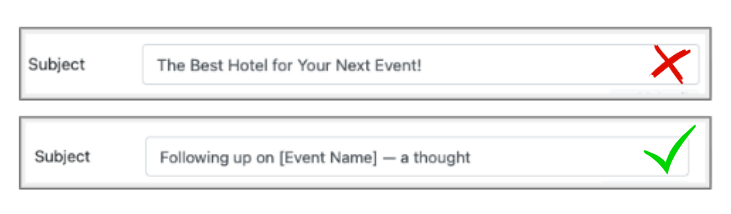
Your subject line is the gatekeeper. It doesn’t need to be clever — it needs to be relevant and human.
Subject lines that work:
“Group rates for [Company Name]’s next offsite”
“Quick question about your Q3 events”
“Following up on [Event Name] — a thought”
Subject lines that don’t:
“The Best Hotel for Your Next Event!”
“Exclusive Offer Inside”
“FWDS: Partnership Opportunity”
Avoid anything that reads like a mass email, because the moment it feels generic, it’s gone.
Brevity signals respect for the reader’s time. Your first cold email should be no longer than 150–200 words. Seriously – that’s it. You’re not closing the deal in this email; you’re earning the reply.
Cover three things:
- Why you’re reaching out (show you’ve done homework)
- What you’re offering (one or two concrete, relevant benefits)
- One simple ask (a 15-minute call, not a full proposal)
Merge tags are table stakes. Real personalization means referencing something specific – their industry, a past event, a mutual connection, or even something as simple as a recent conference they attended or hosted.
It doesn’t have to be elaborate. A single sentence that shows you actually looked them up goes further than a perfectly crafted generic pitch.

Your call to action should be easy to say yes to. Asking someone to “schedule a site visit” or “review our full group proposal” in a first email is too much, too soon.
Instead, ask for something small:
“Would a quick 15-minute call this week make sense?”
“Happy to send over a custom rates sheet — does that seem useful?”
“Are you the right person to connect with on group bookings, or is there someone else on your team I should reach out to?”
That last one is particularly powerful – it’s hard to ignore and often gets a response even when the first contact isn’t the decision-maker.
What to avoid
Your ballroom capacity, F&B minimums, and AV package are important — but not in the first email. Save the details for when they’ve expressed interest. Dumping everything upfront signals that you’re pitching everyone the same thing.
Phrases like “take advantage of our limited-time offer” or “act now to lock in rates” create pressure and distrust. Hotel group sales relationships are built over time. Your first email should feel like the beginning of a conversation, not a sales funnel.
If you send a follow-up and the only thing you have to say is “just following up on my last email” — don’t send it. Every touchpoint should add something new: a relevant case study, a specific date that works for a call, an updated rate for their season, or a piece of content they’d find useful.
Emails from sales@hotelname.com or info@ addresses feel automated and impersonal. Outreach should come from a named person with a real title and direct contact information. People respond to people.
If your email could be sent to any hotel prospect in the world without changing a word, it’s not good enough. Segment your outreach by prospect type – corporate travel managers, third-party planners, association event leads, sports groups – and tailor your message to each. The more specific, the better.
A Simple Framework to Follow
- Does the subject line feel personal and relevant?
- Does the opening sentence speak to their world, not mine?
- Have I kept it under 200 words?
- Is there exactly one clear ask?
- Does this feel like it was written by a human, for a human?
If you can check all five boxes, you’re ahead of 90% of the hotel sales emails landing in inboxes today.
The Bottom line
The hotels that win more group business aren’t necessarily the ones with the best amenities – they’re the ones whose sales teams communicate better.
Start with one email. Make it count.
UpMail Solutions helps hotel sales teams send impactful email communications – from cold outreach to proposals and everything in between. Get in touch to learn how we can help your team convert more inquiries into bookings.
The Booking Isn’t the Finish Line: How to Upsell Confirmed Groups
Turn confirmed bookings into additional revenue with strategic hotel upsell and cross-sell emails. Learn when to send offers, what to promote, and how to use your sales & catering system to identify opportunities and increase event spend.
UpMail Partners with Visiting Media to Bring Hotel Proposals to Life with Immersive 360° Experiences
UpMail partners with Visiting Media to embed immersive 360° virtual tours into hotel proposals, creating engaging, trackable sales experiences that boost conversions and insight.

Why “Less Is More” in Hotel Sales Proposals (And How It Wins More Business)
Discover why “less is more” in hotel sales proposals and how clear, concise, essentials-first proposals help meeting planners decide faster – and help you win more business.